
Are Bike Tire Liners Worth It?

A great ride is meant to be about enjoying the speed and the scenery — until a sharp stone or a thorn brings it all to an abrupt halt. For many cyclists, repeated flats aren’t just an inconvenience; they’re a challenge to both safety and the overall riding experience. This is especially true for road riders, commuters, or long‑distance cyclists, where hidden debris can quickly ruin a ride.
So, is there a way to drastically reduce the chance of a puncture?
One solution is the bike tire liners — a protective layer placed between the tire and the tube, designed specifically to guard against sharp objects like thorns, glass, and sharp stones.
But does it work? Is the added weight and rolling resistance worth it? And which types of riding benefit the most from this added protection?
In this article, we’ll answer these questions and provide a detailed look at the different types and materials of bike tire liners, as well as tips for installation, maintenance, and deciding if a liner is right for you.
What Are Bike Tire Liners?

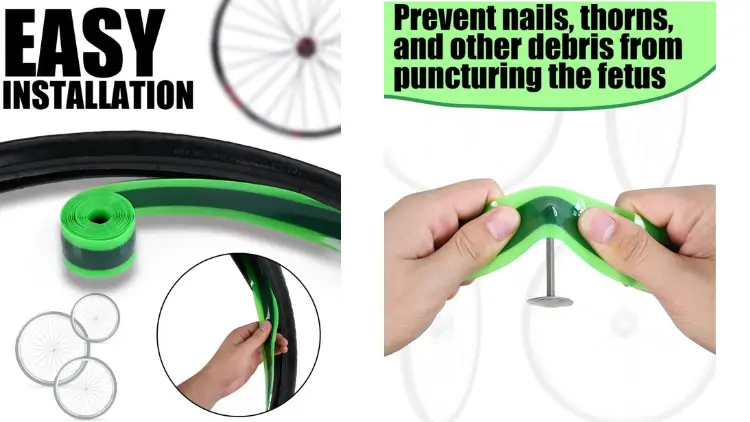
Bike tire liners are thin, tough strips placed between your tire and tube to add an extra layer of protection. They’re designed to serve as a “shield” inside the tire, helping to resist punctures caused by sharp objects like glass, thorns, or small stones.
When your wheel rolls over a sharp object, the liner is the first to make contact. It absorbs the impact, disperses the pressure, and reduces the risk of the object piercing through to the tube. While it’s not a 100% puncture-proof solution, a tire with a liner is far less likely to flat compared to one without.
What Situations Are Bike Tire Liners Best Suited For?
- Road and Commuter Bikes: Perfect for urban and suburban routes, providing better resistance against sharp debris like glass or sharp stones.
- Mountain and Touring Bikes: Ideal for tackling rough terrain, gravel, thorns, and sharp rocks, greatly reducing the risk of flats on long rides.
Related Reading:
- What is a Tubeless Tire? A Beginner’s Guide
- What Is a Clincher Bike Tire? Is It Right for Your Bike?
- Tubeless Tire Sealant: Usage and Maintenance Guide
- Best Road Bike Tires 2025
Main Types and Material Characteristics of Bike Tire Liners
If you’ve been riding long enough, you’ve probably researched tire liners—or at least wondered if you need them. The truth is, tire liners aren’t a one-size-fits-all accessory. Materials and designs vary across the market, and a liner built for high‑speed road cycling won’t necessarily stand up to sharp stones and thorns on a backcountry trail.
Common Types of Tire Liners
Today’s tire liners generally fall into three main categories: TPU/PU, Kevlar, and the older generation of Nylon/Rubber. Each material has evolved to suit different riding conditions and tire types, with distinct characteristics in terms of weight, thickness, and intended use.
1. TPU/PU Liners
TPU (Thermoplastic Polyurethane) and PU (Polyurethane) have become the go-to choices for modern tire liners. They are highly flexible, easy to install, and balance protection with a low rolling resistance — ideal for road and commuter riders.
- Weight: Varies greatly by tire width and design — from ultra-thin road-style liners (~15 g) to wider, more robust versions (~100–150 g).
- Thickness: Typically 0.5–1 mm, making them thin but remarkably strong.
- Widths: Available for tire sizes ranging from 23mm up to 2.4 inches and beyond.
2. Kevlar Liners
Kevlar liners, made from aramid fiber, are designed for maximum puncture resistance. They’re ideal for mountain bike and off-road setups where sharp rocks and thorns are common.
- Weight: Approximately 30–100 g, depending on tire size, with wider versions being heavier.
- Thickness: Around 1–1.5 mm, prioritizing tensile strength and puncture protection.
- Widths: Compatible with a range of tire sizes — 26″, 27.5″, 29″, and standard road bike dimensions.
A tire liner is not a magic bullet, nor does it guarantee total peace of mind. The differences in thickness, weight, tire fit, and performance matter greatly. A liner designed for a road bike might be meaningless in the desert, while an ultra-heavy-duty liner can feel cumbersome and overkill on a sleek race bike.
The key to choosing the right liner is not just relying on marketing claims, but matching it with your tire size, riding conditions, and puncture protection needs. When chosen wisely, a tire liner can save you from the inconvenience of a flat or even rescue an entire race when it counts the most.
Reference for Tire Liner and Tire Size:
- Bicycle Wheel Size Chart: A Complete Guide
- How to Measure Bike Wheel Size
- What is 700c wheel size
- What are 650b Wheels?
- 650B vs 700C: Wheel Diameter, Tire Width, Compatibility, and Riding Experience
Are Bike Tire Liners Effective?
This is the question most riders care about: Is it worth adding an extra liner? Will it prevent punctures?
Short Answer: Yes, they’re effective — but their benefits depend on the conditions and intended use.
Real‑World Test by a Road Cyclist
To test the effectiveness of tire liners, one road cyclist conducted a month‑long test:
- Setup: Two tires of the same brand and size (28mm). One had a standard polyurethane liner installed, the other did not.
- Conditions: Approximately 800 km of riding across urban commutes and suburban roads, including a stretch of old pavement littered with sharp stones and glass shards.
Results:
- The tire without a liner suffered a puncture roughly 300 km into the test, caused by a sharp stone, which fully pierced the tread.
- The tire with a liner performed noticeably better over the same terrain and distance. Although multiple small fragments were embedded in the surface, the liner blocked most of them, preventing air loss and punctures.
Limitations of Liners in Extreme Cases
Of course, a liner is not a fortress. In one mixed‑terrain race, when the rider hit an especially sharp piece of rock, the liner reduced the damage but couldn’t completely prevent the puncture. This highlights the reality that liners aren’t invincible — they’re an added safety measure, not an absolute solution.
Additional Weight and Rolling Resistance
A liner adds roughly 30–50 grams per tire. For most commuters, recreational riders, and gravel riders, this isn’t very important, but worth the added peace of mind and protection. Compared to the downtime caused by a flat, the slight weight and rolling resistance penalty is an acceptable trade‑off. However, for elite riders in competitive races — where every watt and gram counts — the decision to use a liner must be weighed more carefully.
How to install a Bike Tire Liner?
Installing a bike tire liner isn’t complicated, but it does require a bit of patience and attention to ensure the best results. Here’s how to do it:
- Remove the Wheel and Tire:

Take the wheel off the bike, fully deflate the tire, and use tire levers to remove the bead. Separate the tire from the tube. - Inspect the Tire and Rim:
Carefully check both the tire and rim before installation. Remove any small stones, thorns, or debris that could cause punctures. - Position the Liner:
Lay the tire liner flat between the tire and the tube. Make sure it’s centered and free from twists or folds. - Reinstall the Tube and Tire:
Place the liner and tube together inside the tire. Ensure the liner fully covers the area of the tire tread and doesn’t bunch up or fold. - Check the Bead and Liner Position:
Before inflating, confirm that the bead is properly seated and the liner is aligned to cover the tire’s tread area completely. - Inflate and Final Check:
Slowly inflate the tire while checking for any odd noises or liner displacement. Once everything is aligned correctly, fully inflate the tire.


How to install tire liners on a bicycle wheel(video)
For a more visual guide, we recommend watching the video below. It demonstrates how to inspect the tire, insert the liner, and properly reinstall the tire and tube, making it easier to understand the installation process.
How to Choose the Right Bike Tire Liner
By now, you likely have a better understanding of the types and benefits of tire liners. However, the key to making them truly effective is selecting the right one for your riding conditions, tire size, and bike’s performance. Here are some guidelines:
- Consider Your Riding Terrain:
– Road and Commute: If you’re mainly riding well‑maintained roads or urban commutes, a standard TPU liner (0.7–1.0mm thick, 23–38mm wide) is usually enough. It will effectively protect against common hazards like small stones and glass shards.
– Gravel and Mixed Terrain: For rougher surfaces, wider or composite liners (38–80mm) are a better choice, offering more complete sidewall and tread protection ideal for gravel or unpaved trails.
– Extreme or Endurance Races: In situations with sharp rocks, thorns, and challenging terrain, thicker, more robust Kevlar or Aramid‑reinforced liners are worth considering, although they add weight and can be more challenging to install. - Check the Liner’s Compatibility with Your Tire Size:
A liner that’s too narrow or too wide won’t perform properly. For example, a 25mm road tire pairs best with a liner that’s roughly 23–25mm wide. Too wide and it may shift away from the center of the tread; too narrow, and it won’t cover enough area for effective protection. - Weight vs. Resistance Trade‑off:
For most riders — especially for commuting, recreational cycling, and gravel riding — an added 30–50 grams is negligible and well worth the protection it provides. However, for competitive road or track racing, every gram and watt counts, so opting for a thinner, lighter liner may be the better choice. - Installation and Maintenance:
Standard TPU liners are generally straightforward to install and suit most riders who want to do it themselves. Heavier, Kevlar‑reinforced liners may require more patience and expertise, making it worth consulting the manufacturer’s instructions or seeking help from a professional mechanic.
FAQ
Do you need a bike tire liner?
A tire liner is an extra layer of protection, especially worth considering for riders on long commutes, gravel, or in areas with sharp debris. If you already have puncture-resistant tires or run tubeless setups on clean, well-maintained roads, a liner may be less necessary.
Will tire liners slow you down?
They can add a small amount of rolling resistance due to the added 30–50 grams and thickness. For most commutes, recreational rides, and gravel scenarios, the impact is negligible and well worth the added protection. In elite road races or time trials, where every watt and gram matter, this is worth considering more seriously.
What is the purpose of a tire liner?
The main purpose of a tire liner is to add an extra protective layer between the tire and the tube, reducing the risk of punctures caused by sharp objects like glass, thorns, or sharp stones. They’re ideal for rough terrain, gravel, and extreme riding conditions.
How effective is bike tire sealant?
Sealant is highly effective for sealing small punctures (generally under 3–5mm), making it a must-have for tubeless setups. It quickly plugs holes caused by thorns, sharp stones, or small shards, allowing riders to continue without stopping. However, it’s not a solution for larger gashes or sidewall tears and works best as an additional safeguard.
Final Thoughts
There’s no one‑size‑fits‑all solution when it comes to tire liners — only what’s right for your needs. If you’re looking for cost‑effective everyday puncture protection, a standard TPU liner is an excellent starting point. But if your riding is more aggressive or off‑road, it’s worth investing in higher‑performance, reinforced options. By matching the liner to your riding conditions, you can turn it into a reliable ally, providing peace of mind and helping you stay focused on enjoying the ride.


![How to Measure Bike Handlebar Sizes [2024 Guide]](https://falcarbonbike.com/wp-content/uploads/2024/09/bike-handlebar-sizes.webp "How to Measure Bike Handlebar Sizes [2024 Guide] 10")